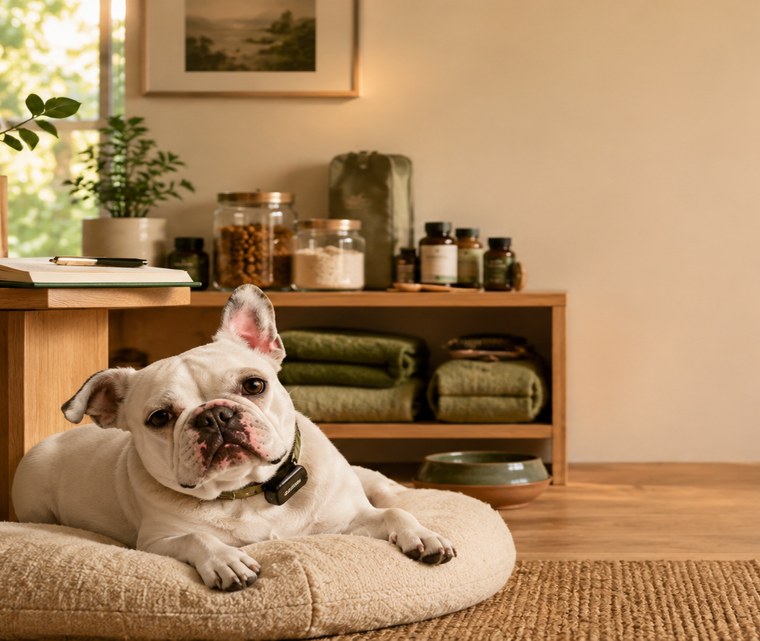
Luna's Lab is one real owner documenting one real dog. It's honest and specific, but Luna isn't your dog — what works for her may not be right for yours, and none of it is veterinary advice. Use it for ideas and questions to bring to your own vet, not as a plan to copy.
What we actually track
Luna's "dashboard" is deliberately low-tech: her weight logged regularly, her activity (we use a tracker for a baseline), and a running note of anything unusual. The goal isn't data for its own sake — it's to make changes visible, because a trend over weeks tells you far more than any single day.
The tools
An activity tracker gives us a baseline so a meaningful drop would stand out. A simple weight log catches slow creep. That's genuinely most of it — the value is in reviewing it occasionally and bringing anything notable to the vet, not in collecting numbers I never look at.
The point of tracking
Tracking doesn't diagnose anything and it doesn't replace vet visits — it just turns vague worry into something specific I can discuss. If Luna's activity quietly dropped, I'd rather notice it in a trend than wait until it was obvious. That's the whole job.
- Is my dog's activity level appropriate for their age and breed?
- What health metrics are most useful for me to track at home?
- When should a tracked change prompt a visit?
- How often should I weigh my dog?