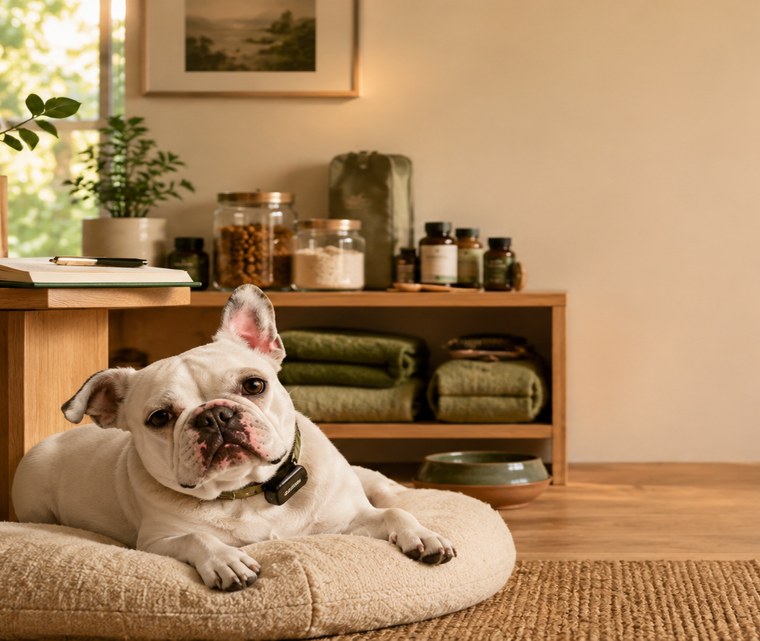
Keeping your dog at a lean, healthy body condition is one of the most strongly evidence-associated things you can do for their long-term health — and it costs nothing. Excess weight is linked to a range of health problems and adds strain to the joints. If you do one thing from DogHealthStack, make it this. As always, confirm your dog's ideal weight and any weight-loss plan with your veterinarian.
Step 1: Know the target
You can't manage what you can't measure. Ask your vet for your dog's ideal weight and body condition score (a 1–9 scale), and have them show you what it should feel like. The quick at-home test: you should be able to feel the ribs easily without pressing hard, see a waist from above, and see a tuck-up from the side.
Step 2: Measure every meal
Eyeballing portions is the number-one cause of slow, invisible weight gain. A scoop is not a measurement. Use a kitchen scale or at least a proper measuring cup, and feed the amount that matches your dog's ideal weight and activity — not their current weight if they're already heavy. Your vet can help you calculate it.
Step 3: Count the treats
Treats are the hidden calories that derail lean dogs. A good rule many vets suggest is keeping treats to a small share of daily calories. Practical moves:
- Use small, single-ingredient treats — or pieces of your dog's own kibble — for training.
- Subtract treat calories from the day's meals so the total stays on target.
- Swap some food rewards for play, praise, and attention.
- Make sure everyone in the household is counting — uncoordinated treating adds up fast.
Step 4: Track and adjust
Weigh your dog regularly (monthly is plenty for most) and log it. Re-check body condition by feel every week. If the trend is wrong, adjust portions in small steps and re-check — and if weight won't shift despite your efforts, talk to your vet, since some weight changes have medical causes.
If your dog needs to lose weight, it should come off gradually and under veterinary guidance — crash dieting is harmful. The goal isn't a number on a scale this week; it's a lean body condition maintained for years. That's what the research associates with healthier aging.
- What is my dog's ideal weight and body condition score?
- How many calories per day should my dog eat, including treats?
- If my dog needs to lose weight, how fast is safe?
- Could a medical issue be affecting my dog's weight?