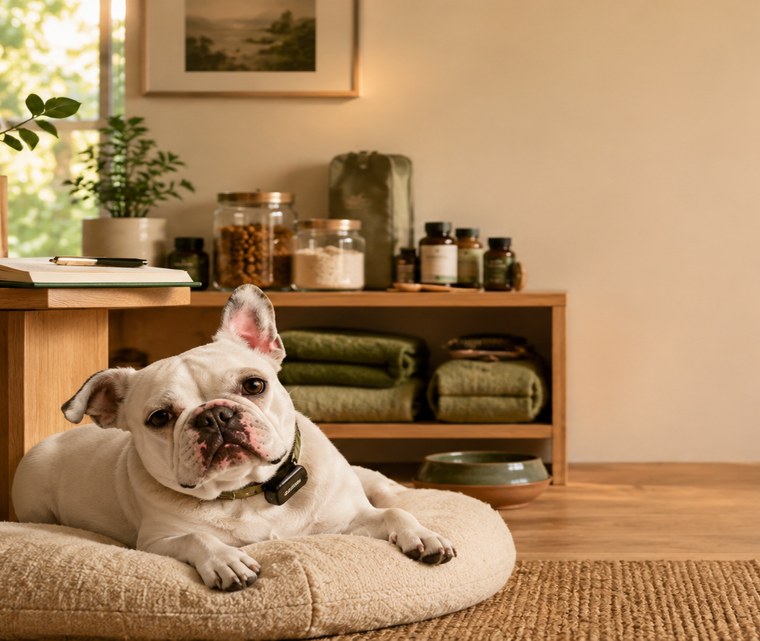
Luna's Lab is one real owner documenting one real dog. It's honest and specific, but Luna isn't your dog — what works for her may not be right for yours, and none of it is veterinary advice. Use it for ideas and questions to bring to your own vet, not as a plan to copy.
How we think about Luna's bowl
The single most important thing in Luna's nutrition isn't a brand — it's the discipline around the bowl. We settled on a complete, balanced food appropriate for her life stage with our vet, and then made the boring part non-negotiable: we measure every meal on a kitchen scale. Eyeballing is how weight quietly creeps on, and Luna is a French Bulldog, so a few extra grams matter more than they would on a Labrador.
The treats reckoning
The thing that surprised me most when I actually did the math: treats add up fast. We now count Luna's treats as part of her daily calories rather than bonus extras, lean on low-calorie options, and use part of her measured food as training rewards. It's unglamorous and it works. For the why behind all this, see how to keep your dog lean.
What we watch
We track Luna's weight and body condition regularly, and we watch energy, coat, and stool quality as everyday feedback. Anything unusual is a question for the vet, not a reason to start tinkering with her food on a hunch.
- What is Luna's — and my dog's — ideal weight and body condition?
- How many calories should my dog get per day, including treats?
- Is my dog's food appropriate for their life stage?
- How should I adjust portions as my dog ages?